Beyond the Controller — How Games Are Changing Us
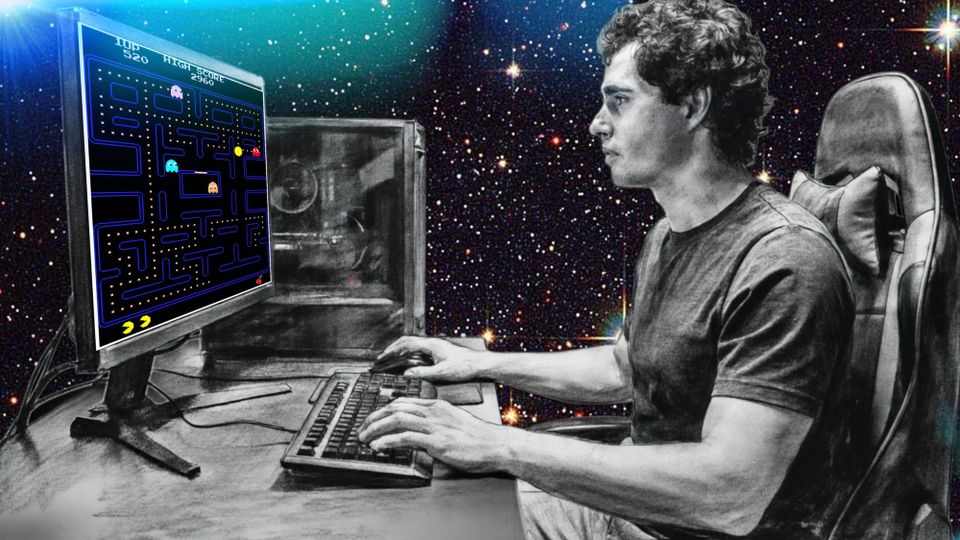
I decided to look into the world of gaming to see how it is affecting us. Gaming is more popular than ever, with massive multiplayer online games such as World of Warcraft and Final Fantasy XIV immersing players in battle, lore, quests, crafting, trade, and much more. There is plenty of scope to practice communication, conflict resolution, decision making under pressure, and team leadership skills. Combat can be against the computer or against other players. In battle, players might have only seconds to decide whether to use a defensive ability, heal a teammate, change position, prioritise an objective, alter the plan after an error, or call for a reset. That does not mean in-game split-second decisions are identical to decisions in medicine, engineering, or a workplace incident, but the core skills/techniques used can be relevant to the real world and useful to practice. Players can build up even more skills through the activities surrounding many games like, creating modifications, running multiplayer servers, building community tools, producing game-jam projects, contributing to open-source game projects, or testing interfaces and accessibility features.
So games can be good cognitively, they can be good for social reasons, can give you a competitive edge, but they can also help you understand another point of view. Playing narrative games can change a person’s views on all kinds of political, social, or even environmental issues. Through rehearsing perspectives, choices, emotions, and consequences, attitudes can shift in surprising ways. Another thing that happens when you play a game is, dopamine spikes in the brain. It’s a chemical that has its origins in daily survival. It spikes naturally to help you meet basic needs like eating, drinking and exercise. Games will simulate situations that the brain normally treats as meaningful like, pursuing goals, mastering skills, finding resources, exploring uncertainty, and cooperating with others. The interesting thing is that dopamine is released even though the in-game outcome is not a real-world survival resource. Your brain doesn’t know the difference. Games can feel intense because the created environments in games are more immediately motivating and concentrated, than the unclear and delayed real-world things we face day to day.
I know my father’s generation used to repeat warnings they heard from their parents about games and television rotting brain cells. While heavy, compulsive gaming can temporarily cause focus crashes or addictive behaviours, it does not appear to damage brain cells. Sometimes the term “dopamine desensitisation” is applied to gaming. It suggests that constant high reward stimulation raises the brain’s enjoyment threshold, making real world responsibilities feel boring and unmotivating. But it is hard to measure dopamine related desensitisation in people and observed differences may have several explanations. It is possible that compulsive gaming causes poor motivation, but it could also be that mental health conditions such as anxiety or depression lead to gaming for relief or escape, that then leads to a lack of control, sleep loss and compulsive gaming. Or it may run both ways; distress and poor sleep causes compulsive gaming, and compulsive gaming causes poor sleep and distress.
Interestingly, games can be used to treat medical conditions. The concept is known as digital therapeutics. When a game is deliberately engineered for therapy, it can force the brain to reorganize itself and build new neural pathways—a process called neuroplasticity. For example, games can be prescribed to treat children with ADHD. Neurological disorders such as Parkinson’s disease and people recovering from strokes can be treated with virtual reality games and motion controlled platforms that help fix damaged motor networks. And targeted speed-of processing games can serve as a shield against aged related cognitive decline in cases of dementia and Alzheimer’s disease.
Playing games is also one of the ways people get interested in creating their own games and wanting to work for game companies. In New Zealand, the game development industry officially surpassed NZ$1 billion in annual revenue for the 2025/2026 financial year. The entire New Zealand tech sector generates roughly NZ$20 billion in annual revenue. So gaming currently makes up 5% of all tech revenue in the country. Currently there are over 1,400 people in full time equivalent FTE roles working in the NZ game development industry.
I spoke to several NZ narrative designers to find out how and why they got into the game industry, to share their thoughts on the benefits of games, their philosophies when writing for games, and advice for those who wish to follow in their footsteps.
Rick Stemm is Creative Director at Level, a studio that focuses on creating interactive digital experiences that teach, engage and inform players through game mechanics. The studio is tackling the important educational game market and is closely working with schools and students to refine its products. Video games are increasingly being adopted by schools in many countries to help teach primary and intermediate grade subjects like maths, science, computing and reading/literacy subjects. But there are also ongoing issues around finding suitable games, worries about cost, technical problems and teachers wanting more training in using games to meet learning objectives. I asked Rick how he approaches game design for educational purposes. He mentioned, “One of the frameworks we use is self-determination theory. It is a really well-established science that works for how humans learn, how we grow as people, and what works well in games.” The theory helps to explain why learners choose to persist in a task and grow genuinely interested in it, or why they might lose interest in it. For video game design, it suggests that games are most motivating for players when they feel in charge of the game, when they receive useful feedback and the game is well paced, and players feel connected to others so there is room to discuss, cooperate, and have shared goals.
Rick mentioned, “How people learn is really complicated, but there's a few things we know. People learn better when there's a social component they can share with peers. People learn better when they're practically solving real-world problems or applying it, which, of course, games are very good at. But also, the main thing is people learn when they're motivated. You might never get someone intrinsically motivated in math, but you can kind of move up their levels of motivation by helping them see other benefits. So, there's definitely huge opportunities, because games are good for being enjoyable, they're good at creating different structures of motivation. They're good at simulating real-world applications. But it's also a real challenge. We never want to replace teachers, we want to supplement teachers. We’re thinking about the social component, which is about connecting kids to one another, to their parents, to their teachers.
There's also just this big challenge when you optimize for engagement. If you do the things that make you come back to play the game - mobile games are really good at this - they give daily rewards and things like that. But that often reduces educational outcomes, because if your motivation is just to get the reward, then you're actually not paying attention learning. Some of the most effective ways of learning aren't always the most entertaining. We’re still figuring out where the balance is.”
I also asked Rick how he feels about introducing new ways of teaching in schools that are different from what he grew up with, such as traditional rote learning. Rick told me, “I was pretty good at memorizing and taking tests, so I got through school, but I didn't find that to be an effective way of learning. I taught at SAY Sí (short for San Antonio Youth, Yes!), a tuition-free, long-term after-school arts and creative-youth-development programme for middle- and high-school students in San Antonio, Texas. Their philosophy is, teach kids through art. They had programmes in visual arts, and theatre arts, and film, and video games, that kids could choose. But the idea is you give kids access to art, and you treat them like artists. You give them good equipment, you give them film cameras in the theatre and computers that can make games. You give them teaching artist mentors; people who are working artists who also teach part-time to mentor the kids. You let them make art, and give them space, and mentoring, and equipment, and teach them to be artists, and not only will they make great art, they will actually learn how to learn. Because they're intrinsically interested in making art, they will learn the tools. And once they learn the tools, they can actually apply that in how they learn other things. They're like, ‘I was able to teach myself how to code, how to use this camera, etc. I can teach myself these school subjects.’ And we also make them collaborate. So they learn how to collaborate by doing group art projects, which means they learn how to be better classmates. We put them in leadership positions by leading group art projects, which means they learn to be more confident in school. So basically, by just letting them do art in a real way they see these outsized benefits in all other aspects of their life. And so we ended up with students who were turned around from failing grades into, graduating and going to really good colleges, because we taught them how to learn. We taught them how to believe in themselves, we taught them that they were capable of doing cool things by letting them make art.
One of the reasons I joined Level is it really sounded like their mission and the way they wanted to use different game aspects to support learning really reminded me of SAY Sí and Creative Youth Development - creating an online platform where kids can work together and solve problems and creatively express themselves and get hands-on with things, and that just works. So I'm a big fan of the Creative Youth Development model and hoping to bring some of that philosophy into level, as a creative director.”
I asked Rick what advice he had for young people wishing to enter the video game industry.
“So, a couple bits of advice that I always give is, one, make things. If you want to be a game dev, make games. If you want to be an artist, make art. If you want to be a writer, write things. So just make stuff, however good, however small, whatever way, just make things. Do game jams, do side projects with your friends, do school projects. That's both useful in building your portfolio, but also it's how you learn and figure out what you like and what you're good at, and get stuff out there. Two, make friends, collaborate, get creative partners, do group projects, learn how to be a good human that other people want to work with. It shows you can work in an environment, and all game teams are large and collaborative. And then, three, this is a little more nuanced, but I often tell people there is no one path into game dev, and my route certainly shows that, but the idea is that, I think sometimes people get locked into it, going, the only way for me to be a real game dev is to run my own studio and do everything my way, and make an indie darling hit. Or the only way for me to be a real game dev is to work an X role for a AAA company, making the next, Assassin's Creed or Grand Theft Auto. And, those are some ways, but they're not the only way, and they all have their pros and cons. If you're an indie, it's great, because you do have that creative control and freedom to do what you want, but you're often hustling for money, and you're often doing the things that didn't get you into it, right? You joined because you wanted to be a game designer, but now you're doing marketing and funding and business plans to do your indie studio. If you're a freelancer, it's really cool in that, you can set your own hours, you can work for a number of different companies. You can work remote, get your freedom in. But you have less control, you're given more direct assignments, and you're often, gigging and trying to find work. If you work for a big company, again, great, you get paid a salary to do games which is amazing, and you may even be able to work on some really big games that other audiences will see, which is fantastic, but, it's often long hours, and it takes a while to have the kind of creative control, that you might want. It's years and years before you can really have the kind of impact that you want to have. And being a hobbyist is another thing. It sucks to have to work a full-time job and then do art. Like, that can definitely be a pain to know that you're not reaching much of an audience or getting paid for it, but also, like, the most fun art projects I ever did in my life were indie art projects that I got paid very little money for, because I wasn't answering to anybody except myself, so I just got to do real fun things. So all of those routes are valuable, and I have lived all of them, and they all have their pros and cons. Figure out which one of those works best for you. And if you try it and you don't like it, change. It's fine. There are multiple ways to do it, don't get locked into any one.”
Next I spoke to Laura Anderson who began her career in Scotland (Edinburgh) as a copywriter and journalist, and then came to New Zealand and now has her own company, Tartan Moa. She was narrative lead on the game, “Love & Pies”, has won a Bafta award for a children’s television program called “Ooglies,” and is currently writing dialogue, characters, storylines and in-world text for “Beyond These Stars” a PC, worldbuilding game.
I wanted to ask Laura about a new genre of video games that has become really popular, known as safe, cozy, non-violent games. What are these games, who plays them, and why have they become so popular? Laura told me, “I think cozy games have been on the rise since the Covid pandemic, when we were all trapped at home. Some people, obviously, were still playing the same games, but “Animal Crossing” for the Nintendo Switch exploded, and everyone was playing it, and that is an inherently cozy game, where you are building nice houses for animals on an island, and you could go online and visit your friends online. So, even with my colleagues at work, we would go on and visit each other's islands and talk online as a fun thing to do in the evening. So, that really elevated the cozy game genre. There were already cozy games before that, and “Love & Pies” was a cosy game as well. But that just elevated everything, and just pushed it to the forefront, and now there's a lot more, and I do think they are safe spaces. The thing I love about them generally is the communities are safe, and they're for anyone, whereas a lot of first-person shooter games can feel quite aggressive. Not all players are aggressive when they play these games, but I have certainly encountered people not behaving well on and offline from some of those games. With cozy games everyone belongs. It doesn't matter who you are, you can go and play a cozy game and feel good and safe. People play them for loads of reasons, including them not feeling so stressed when they play them. And I would also say that a huge number of people play games and don't think that they play games. Even the New York Times crossword is a game, so a lot of people play games on the phone, and wouldn't even consider themselves a gamer. The majority of gamers are women, and a lot of those women wouldn't ever think that they were a gamer, but they play more games on their mobile phone than a 15-year-old boy might play on his console, so I think the language about it, that it’s all about teenage boys is not the reality of gaming. It covers a broad spectrum of things, and a huge number of people play them.”
I wanted to know what Laura’s personal writing philosophy was as she has worked across many different areas including film, television and video games. “ Personally, whenever I can, I like to write stories that centre my belief in equality, kindness, and a sense of goodness, and that probably sounds a bit silly, but I want to believe that people are inherently good. We can care about each other, so my stories, are guided by this principle. So in games, for instance, in ‘Love & Pies,’ there's bad, dramatic things that happen, but wherever possible, even with the villains, I'm showing moments of humanity and goodness. And the fun thing about that game is then you get to usurp that and do something that upsets people, but I still like showing that there's a core of goodness, and that game (‘Love & Pies’) really heavily fore fronted equality and another belief that love is love, so everyone has the capacity to love and be loved by whoever they want. Then in the game I'm writing now, I've been able to forefront, again, this notion of humanity, but also personal values of anti-colonialism, which is a big part of the game and I obviously believe that too, and also environmentalism, the positive aspects of environmentalism and the negativity of climate change. So those are different messages, and they're both very much part of me.”
Another interesting narrative designer I spoke to was, Moana Moran who is the director of Path Weaver Productions a small, Wellington-based—Te Whanganui-a-Tara—boutique production house focused on interactive narrative design and “refreshingly different” games. She has a degree in anthropology with a minor in creative writing from Canterbury University, then later completed a Masters degree at Massey University in Wellington. Moana told me about a massive and highly polarised online culture war that started in 2014, called ‘Gamergate’ that influenced her Master’s thesis. The controversy began in August 2014 when a blogger made a false claim against his ex-girlfriend Zoe Quinn, who he said had a sexual relationship with a gaming journalist in order to receive a positive review of her indie game, ‘Depression Quest.’ The lie, caused Zoe Quinn to experience doxing, hacking, and death threats. Though she was primarily advocating empathy for mental illness through her game, ‘Depression Quest’, and pushing for tech and gaming sectors to be more inclusive of women, LGBTQ+ creators and marginalised voices, many right wing media outlets were adversarial and sceptical, arguing that people like Zoe Quinn were trying to get sympathy in order to target traditional gamer culture. Right wing media claimed games were male spaces only, and that sexism was being weaponised to kill free speech and bully gaming companies to change their products.
So in this context, Moana decided to title her Master’s thesis ‘The Quest for Change: writing video game narratives to battle sexism.’ Moana said, “That was the context at the time, and I was sitting in the space of ‘I’m female and I've played games my whole life. I've got female friends who've played games their whole lives. Why should this space not be for us too?’ And as a writer, I was thinking could people play games and become theoretically, less sexist in the process. Yeah, so that was my question. Could that happen?”
I asked Moana why it is so important to make games with positive social impact, and if there is a risk that impact games might mostly get played by people who already agree with the message, rather than the people they’re meant to challenge.
“Is there a need for it? Absolutely. The world is full of toxic behaviour and toxic people, that is some of what my research backed up a bit. I strongly feel that the more we can build bridges of understanding and see our common humanity, the more we can help dispel some of that hate. As a platform that can give people different experiences from their own, games are super powerful in that space. As for the second half of the question I think one of the things that really motivated me and still motivates me in terms of how we approach game design, is I want to design games that are fun first, because I want them to be interesting and fun to play so that a person almost doesn’t realize they are learning in the process. So having a light touch with how educational or learning or empathy based it is. I don't know how to reach people who are super entrenched in their views though. My hope is that through making games that are fun enough and accessible enough in terms of their stories and the things that make them fun, that we'll reach more people, word of mouth will spread and it will attract more people that maybe we don't have a direct connection to.”
I also spoke to Stacey Wellington, Senior Narrative Designer at PikPok, Wellington’s largest game studio. She has an MA in Classical Studies and worked in libraries and museums before moving into games and narrative design. I asked Stacey what she thinks are the main differences between gaming platforms, since PikPok works across multiple platforms. Although it has a strong mobile-game heritage and many of its biggest franchises began on iOS and Android, the Wellington-based developer and publisher describes its catalogue as spanning PC, console, and mobile, with selected releases also appearing through web/cloud and virtual-reality platforms.
Stacey told me, “The main difference between platforms that I see is that mobile games tend to be targeted towards more casual genres, and designed to be played for shorter time spans. So if you're on the bus, then you can play your game for 10 or 20 minutes, and then put it down, and then maybe you do that twice a day, and that's your engagement. Whereas another platform, like a console, narrative-heavy game, you might sit down and play for 4 hours.”
I asked Stacey if she has worked on a game or played one where she personally saw evidence of the story or characters changing how someone thought about an issue or group of people. She told me, “Change is quite a stark thing. I can see positive impacts online in Discord groups or Facebook groups, with people connecting, and then having positive interactions over games, like with films or books, these all shape the culture. All those things feel positive to me, but I think once you get into changing attitudes, it's kind of hard to perceive unless it's really stark, and I don't think I've seen examples. Yeah, not that I could think of, anyway. Which isn't to say it doesn't happen.”
I also asked Stacey what she would say to someone who is sceptical about games having any real benefit, and sees them as a waste of time or distraction. Stacey told me, “I don't mind if people feel that way, you know? Like, if people don't want to play games, and that's how they want to use their time, then I find that completely fine. But then also games are a creative medium, so it has all those benefits around the things you're talking about, like social, and representation, letting people experience stories and worlds and understand themselves, so it has all that creative side, but then they're also a commercial product, and no commercial product is successful if it's not meeting a need that the user base has, and so the fact that games are so increasingly, popular and widespread, it kind of just shows that they are meeting a need. And again, depending on the genre, those needs can be really diverse. It can be a social connection thing like multiplayer online games give, or creative outlets like Minecraft and Roblox, or, dress-up-based games, or escapism through story, or even just, like, unwinding through a mindless puzzle. It's all those things. The need that these are serving are all different, but it provides value to the people who are playing them, so I feel like the popularity of games kind of speaks for itself, in terms of the value it brings for me. But also, I find it fine if some people don't want to play games.”
I was surprised by this answer and asked Stacey, ‘so you're saying that the popularity of the games argues for the benefits of the game? But critics might say, regardless of whether the game is popular or not, it might have a negative impact on someone. It could be addictive, there could be violence in the game, it might affect how the player views other relationships in real life. What would you say to these things?’
In response Stacey suggested, “It’s fair if there’s criticism of some games in the way they are designed, if for example the studio and company responsible are unethical about the way they are creating the games, but there are so many games which are cozy for example, that also exist within the same ecosystem, that I say it's fine if you don't want to play certain games, it's fine if you think that there's certain genres that you don't agree with, you just can’t paint the whole thing with one brush, because there’s so much breadth in there.”
My last question to Stacey was about AI. How is it changing writing?
“AI, I think, is in a bit of a weird place where…it's still in the sort of wait-and-see-how-it's going to turn out phase, because currently the LLMs like the chat GPTs of the world, they still have limitations, especially in terms of storytelling, versus just text output, so, they’re not yet good enough where they could be a replacement. One of the unknowns is how good they'll get. But then also there's the factor currently on Steam, where you have to disclose if you use AI, and then there's sometimes backlash against companies that disclose that they've used it. And every so often, there are scandals in the press about AI and its usage, and then there's also where the regulation will eventually land. Obviously AI learns off something and there's countries and governments that haven't decided where they stand on that legally yet. Are player's still going to want to play it if the quality goes down, are they morally averse to AI? Or is it eventually going to be regulated? But I also think that writing isn't just about text output, it's about communication. I think that writing and story are about the connection between people, and connection between the writer and the reader, or the narrative designer and the player. I don't know if it'll ever feel the same, if the person's taken out of it. Currently with AI, there's no specificity to the perspective, and so even as a player, you can kind of feel there's no one on the other end. Maybe they'll get better, and they'll be able to emulate that, increasingly.”
Finally I spoke to a former colleague of Stacey’s, who recently left PikPok, and also worked as a narrative designer there. Sarah Daymond was kind enough to answer a few final questions. I wanted to know what a narrative designer actually does. Stacey told me, “I'd say a big part of the narrative designer's role is to take you on a journey. So even if there aren't any words on screen or even characters on screen, you are at some point in the game's journey. And narrative designers don't always get to think about the moments between words. But when we do, we are often thinking about how we want the lighting and sound and environmental level design to convey the story that we're getting across. Because all of those things are really, really important for the player to get caught up in.
I asked Sarah what surprised her the most about writing for mobile games, as opposed to writing for books or theatre or film. She replied, “The hardest thing to get used to, especially in mobile games, is the word count limit for each given line or string. Because you might hear back from UX that, this is way too long. It's breaking the UI. We need half as many words. That can be quite hard.” I also wondered what Sarah thought about whether there is room in New Zealand for more indie game startups. She told me, “Short answer is absolutely yes. New Zealand, is just such a creative place, it has always been full of weird little ideas. My brother is a musician and he's very knowledgeable about the history of New Zealand music. So I grew up listening to all sorts of bands from like the Flying Nun label all through the 70s and 80s and I think early 90s. Just like New Zealand's kind of cultural history in terms of a few people getting together to make a specific thing, I think absolutely there's more room in New Zealand.”
One of the last questions I asked Sarah was if she had any advice for young people keen to get into the gaming industry and what she’d like to do in the future. She told me, “If something is your dream, then go for it with both hands. But the industry is tough. Right now there are so many barriers to even getting entry-level jobs in the game industry. So that is something that I would personally really like to try and do something about, at least in New Zealand. I would love to find some sort of way to help people upskill into narrative design or other parts of game development and get credits and experience to their name that's more than game jams, because game jams are really useful for learning skills but a lot of companies won't even look at your CV if you haven't done a shipped commercial title. I think the other piece of advice would be, to learn a broad set of skills across gaming because not many people hire for narrative design. But if you are looking into just game design, there are more roles. There's a lot of demand for programmers. So the more skills someone can accumulate the better.”
The video gaming world is huge and it I enjoyed covering some of its angles. Thank you to Rick Stemm, Laura Anderson, Moana Moran, Stacey Wellington and Sarah Daymond for providing their unique perspectives on this interesting topic.